#7 - What is Viscosity?

What is Viscosity??
Ever wondered why your coatings sometimes don't flow or level quite right? The answer often comes down to viscosity — and there's an easy way to measure it!
Our latest Tech Tip focuses on the Viscosity Cup, a simple but powerful tool that helps you measure the thickness of your paint or coating before application.
Viscosity is the term used to describe the thickness of a liquid, e.g. water has a low viscosity (thin) while oil can have a high viscosity (thick).
Having the correct viscosity of paint is crucial to ensure the best performance of the paint is achieved, before, during, and after application.
Many factors outside of the tin can change the viscosity of paint, inc temp, (the colder the paint is the thicker it will become, and vice versa).
A paint's recommended viscosity (measured in seconds) can be found on its TDS.
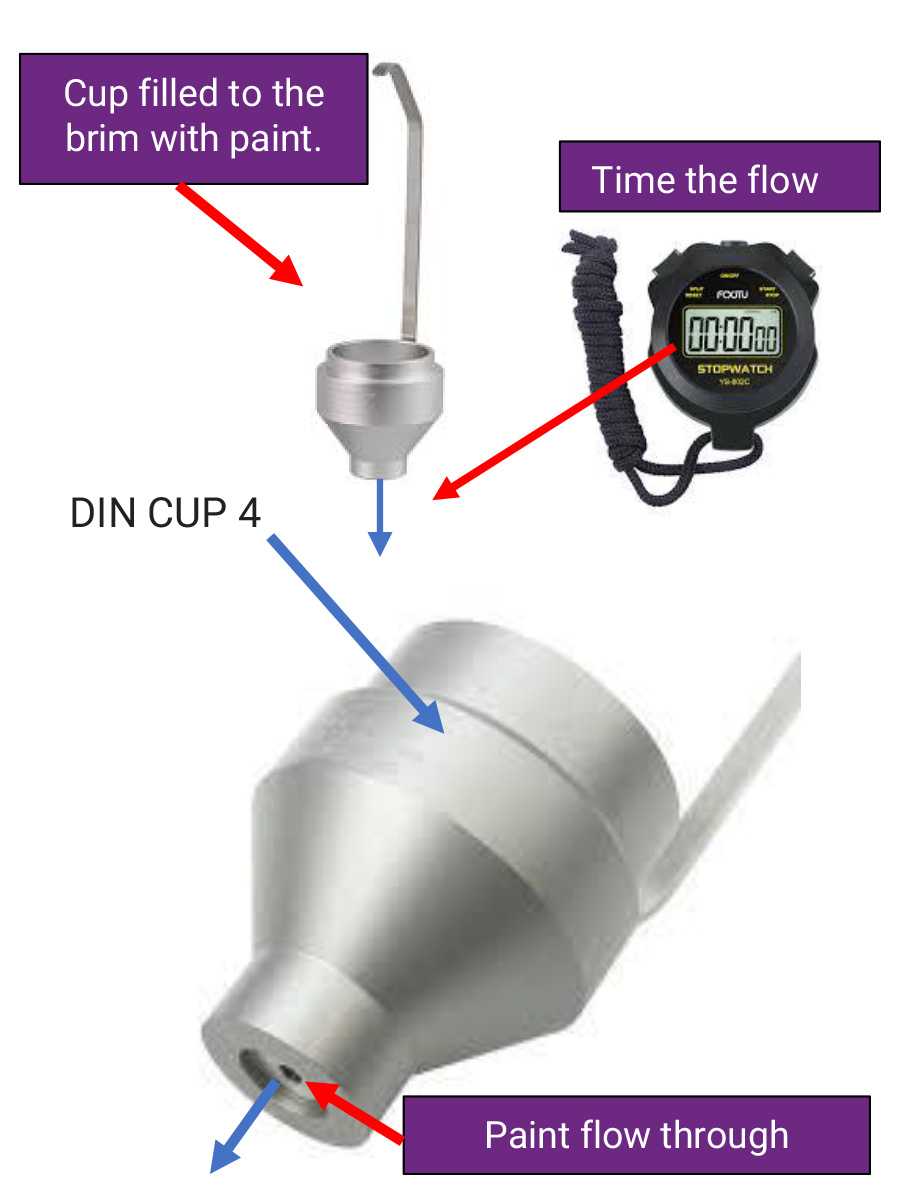
A viscosity Cup is used to measure the flow of the paint through a specifically sized hole in the bottom of the cup. The flow of the paint is timed as it passes through the hole until the stream of paint breaks into drops. That time gives you the viscosity of the paint.
Why use a Viscosity Cup?
- Consistency: It provides a standardized method for ensuring a paint has the correct consistency before application, especially in professional settings like paint manufacturing or body shops.
- Better finish: Using a paint at the correct viscosity prevents application issues such as "orange peel," runs, sags, spitting etc.
- Proper thinning: It helps determine the right amount of thinner to add to a paint or coating to achieve the desired fluidity and performance.
- Adjusts for temperature changes: Since temperature affects viscosity, using a viscosity cup allows users to check and adjust their paint mix to account for temperature fluctuations, which is critical for consistent results.
TIP in the colder months of the year if your paint has been in cold storage be sure to warm your paint up to around 20°C before you use it. This will bring the viscosity of the paint up to where it needs to be before the addition of catalysts and reducers, to line up with the products TDS.
A common type of Viscosity Cup found in Refinish and Industrial applications is a DIN CUP 4 / 20°C.
For further information on Viscosity cups and their use please consult your local Valspar or DeBeer Technical Representative.

This tip was originally written for DBNZ Coatings and has been re-posted with permission.
Download Tech Tip #7Size: 227.96 KB | File Format: .pdf